

Melasma or Hyperpigmentation? 6 Proven Ways to Tell Apart
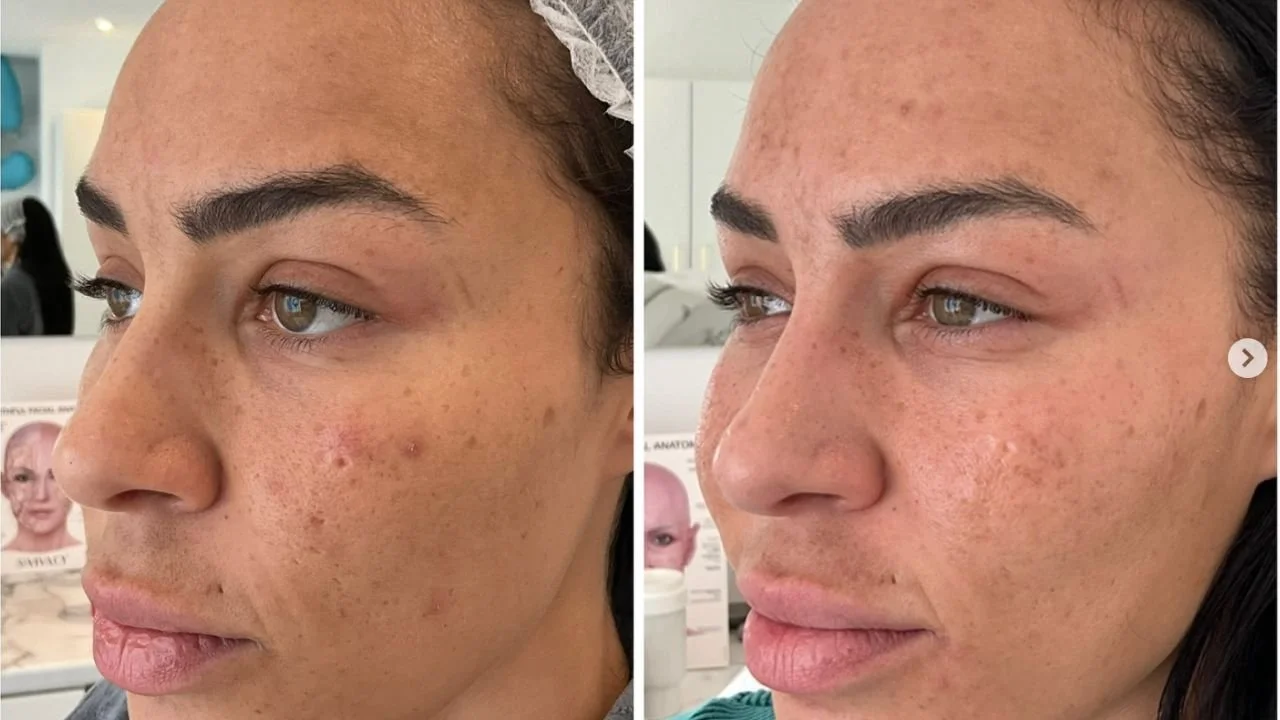
Nurse Reeya gets asked this almost every week in the clinic, usually by someone pointing at their own cheek in a hand mirror, half-convinced they already know the answer and just want her to confirm it. Here is the short version: melasma is actually a type of hyperpigmentation, not some separate thing entirely. But the melasma vs hyperpigmentation question still matters a lot, because treating one like the other can genuinely make skin worse instead of better.
Nurse Reeya runs Plump It Upp. Pigmentation is the part of her job she cares about most, probably because she spent years watching clients get talked into the wrong treatment somewhere else first. So let us actually sort this out.
The Short Answer

Hyperpigmentation is the umbrella term. Sun spots, age spots, freckles, acne marks, all of it falls under that one word. Melasma sits inside that umbrella as its own thing, largely influenced by hormones and sun exposure. It is the one that keeps coming back even after you think you have beaten it.
| Melasma | Hyperpigmentation | |
|---|---|---|
| Main cause | Hormones, sun | Sun, acne, injury |
| Location | Cheeks, forehead, upper lip | Anywhere on the body |
| Pattern | Symmetrical, blotchy | Small, distinct spots |
| Comes back? | Often, without upkeep | Usually fades for good |
Nurse Reeya would rather build gradual, predictable results than recommend an aggressive treatment that risks making pigmentation worse.
What She Actually Looks For
Post-inflammatory hyperpigmentation, or PIH if you want the shorthand, is the mark left behind after a pimple or cut heals. Sun spots and age spots fall in that same bucket. Skin inflammation, acne, irritation, burns, or injury can trigger it, and the American Academy of Dermatology backs that up too. Most of it fades with time and the right products, which is honestly the easy case.
Melasma is fussier. It likes the cheeks, the forehead, the upper lip, the bridge of the nose, and it almost always shows up symmetrically, like a mirror image of itself. Some people call it chloasma, and pregnancy is its most famous trigger, hence "the mask of pregnancy." Nurse Reeya has treated plenty of clients who never carried a pregnancy and got it too, usually from birth control or another hormone shift she had to help them trace back.
Recently, she saw several clients who were convinced they had "just sun spots," and two of them turned out to have melasma that had been quietly spreading since a pregnancy years earlier. That's the melasma vs hyperpigmentation mix-up in a nutshell, and it happens surprisingly often.
How She Tells the Difference
Location first. Melasma mirrors both sides of the face and blurs at the edges. Hyperpigmentation is usually more scattered, showing up wherever the skin has actually been hurt, an old shaving nick, a healed breakout, a sunburn from a trip barely remembered.
Then she asks about history, because that's usually where the real answer hides. Pregnancy or birth control in the timeline points toward melasma. A breakout or a summer without sunscreen points the other way. Sun exposure often makes melasma darken much faster than other forms of pigmentation, while other forms of hyperpigmentation usually develop more gradually.
Sometimes, though, she just needs to look at it under proper light. That matters even more on deeper skin tones, Fitzpatrick III through VI, where guessing wrong costs more than it should. She's seen patients whose pigmentation worsened after unsuitable treatment elsewhere, which is exactly why she never books anyone into a Hollywood Spectra session without seeing them in person first.
What She Actually Prescribes
For plain hyperpigmentation, chemical peels are usually her first move. They speed up cell turnover and lift dark patches faster than most people expect, and she'll layer in vitamin C, retinoids, or kojic acid depending on what the skin can tolerate.
Melasma gets the opposite instinct from her, gentler, not stronger. Her goal is never to chase the fastest result. It's to choose the treatment that gives the skin the best chance of improving safely over time. She's seen aggressive lasers and harsh chemical peels make melasma darker instead of lighter, which is the last thing anyone wants after paying for treatment. That's why she reaches for Hollywood Spectra instead, a laser that can be used safely on many melanin-rich skin tones when appropriate settings are used rather than blasting through it. She'll usually add tranexamic acid, azelaic acid, or hydroquinone into the mix, and SPF is not optional, ever, for either condition.
If you want the realistic version of a treatment plan, it usually looks like Hollywood Spectra sessions spaced out over months, daily SPF without exception, a couple of targeted activities, and chemical peels dropped in periodically for texture.
What People Actually Ask Her

Genetics play a small part in melasma, sure, but hormones and sun do most of the real damage. Men get it too, though Nurse Reeya sees it far less often, and it tends to go unnoticed longer on them. And no, it rarely fades on its own. She wishes she could tell clients otherwise, but active treatment is almost always what actually moves the needle.
If You're Still Not Sure
That's completely understandable. Nurse Reeya still needs good lighting and a real look before she'll commit to a diagnosis herself, so don't feel bad if a mirror isn't cutting it for you either. Every consult at her clinic starts with an honest assessment, not a sales pitch, because skin of colour deserves advice that's actually been tested on skin like yours, not borrowed from someone else's face.
If you're still unsure which type of pigmentation you're dealing with, a consultation is the safest place to start. Treating pigmentation begins with identifying the right cause.