

Nasolabial Fold Filler: 5 Different Options Compared Honestly
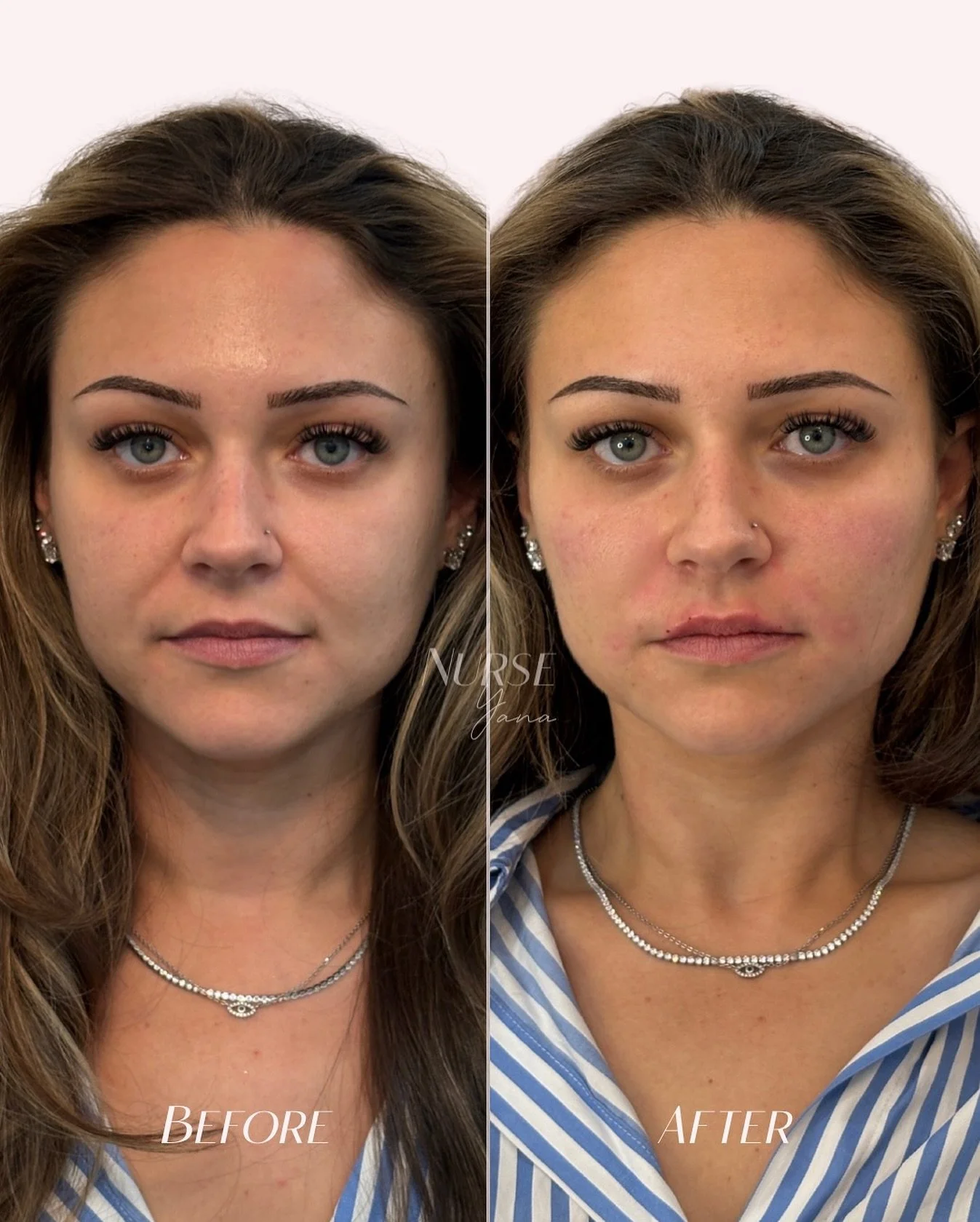
The right nasolabial fold filler depends on how deep your folds are, how your face moves, and what kind of result you’re actually looking for. That’s the honest answer. Anyone who recommends a product before assessing your face in person is skipping the most important step.
Nasolabial folds, the lines that run from the sides of your nose to the corners of your mouth, deepen with age as volume shifts in the mid-face and skin loses elasticity. They’re a normal part of facial anatomy. Everyone has them. But when they start making you look more tired or heavier than you feel, filler is one of the most effective non-surgical options available for softening them.
This guide compares five commonly recommended products for treating nasolabial folds, addresses the overfilling question directly (because that’s what most people are actually worried about), covers what it costs, explains the first appointment from start to finish, and is honest about when filler isn’t the right tool. AtPlump It Upp Medi Spa in Etobicoke, Nurse Reeya’s philosophy is conservative. The goal is always that you look like yourself, just more rested.
Why Nasolabial Folds Get Deeper Over Time
It’s not just the skin. The mid-face is a layered system and aging affects multiple layers at once. Collagen production decreases by roughly 1% per year from the late twenties. The fat pads in the cheeks gradually shift downward and reduce in volume. The upper jaw bone recedes slightly with age, removing structural support for the overlying skin. Years of smiling creates repetitive creasing in the same spot.
The fold deepens from all of these causes at once. The skin over the fold has less support below it, more movement across it, and less natural hydration within it. Filler addresses the support layer. It restores volume that has shifted away and reduces the depth of the crease. It doesn’t change the skin itself or stop the aging process. But it can make a significant visible difference when placed well.
For many patients, the best approach isn’t treating the fold in isolation. Restoring volume to the cheeks simultaneously reduces the downward pull that deepens the fold from above. An injector who only treats the fold and ignores the mid-face context may produce a result that looks unbalanced from certain angles. This is one of the key assessment decisions that happens in a consultation.
Natural vs Overfilled: What the Difference Actually Looks Like
This is the question most people are carrying when they search for information about nasolabial fold filler. Not ‘which product is best’, but ‘how do I make sure I don’t end up looking like that’. The fear is valid. Overfilled nasolabial folds are visible, and once you’ve noticed them on someone else, you can’t unsee them.
The overfilled look almost always comes from one of two things: too much product placed directly into the fold, or product placed without considering how it integrates with the rest of the face. A fold that looks completely smooth at rest but distorts when smiling is a product volume problem. A fold with a visible edge or shelf effect is a placement problem. Both are avoidable.
Factor: Fold appearance
Natural Result: Softened, fold still visible when smiling
Overfilled Result: Fold completely flattened, unnatural at rest
Factor: Facial movement
Natural Result: Face moves normally, expression unchanged
Overfilled Result: Stiff appearance, expression seems restricted
Factor: Cheek-to-fold transition
Natural Result: Smooth, gradual transition
Overfilled Result: Abrupt edge or shelf where filler ends
Factor: Profile view
Natural Result: Balanced, harmonious facial proportions
Overfilled Result: Pillow-like fullness that distorts facial balance
Factor: At rest
Natural Result: Refreshed, rested appearance
Overfilled Result: Puffy or heavy appearance
Factor: Amount used
Natural Result: Appropriate for anatomy, conservative
Overfilled Result: Too much product regardless of anatomy
Natural results don’t eliminate the fold. They soften it. When you smile, the fold will still appear, because the fold is part of how your face moves. The difference is that it’s less deep at rest and creates a smoother shadow. Patients who understand this come away satisfied. Patients who want the line completely gone are likely to be disappointed, and a good injector will have this conversation before treatment, not after.
Conservative technique matters here more than product choice. An experienced injector using Revannesse Contour conservatively will produce a better outcome than a less experienced injector using the same product with heavier placement. When you’re researching providers, look at before and after photos at rest and smile. The smiling photo tells you much more about whether the result is natural.
At Plump It Upp, we primarily use Revannesse fillers by Prollenium. Depending on your facial anatomy and treatment goals, we typically recommend Revannesse Ultra, Revannesse Contour, or Revannesse Outline for treating nasolabial folds.
Nasolabial Fold Filler: 5 Options Side by Side
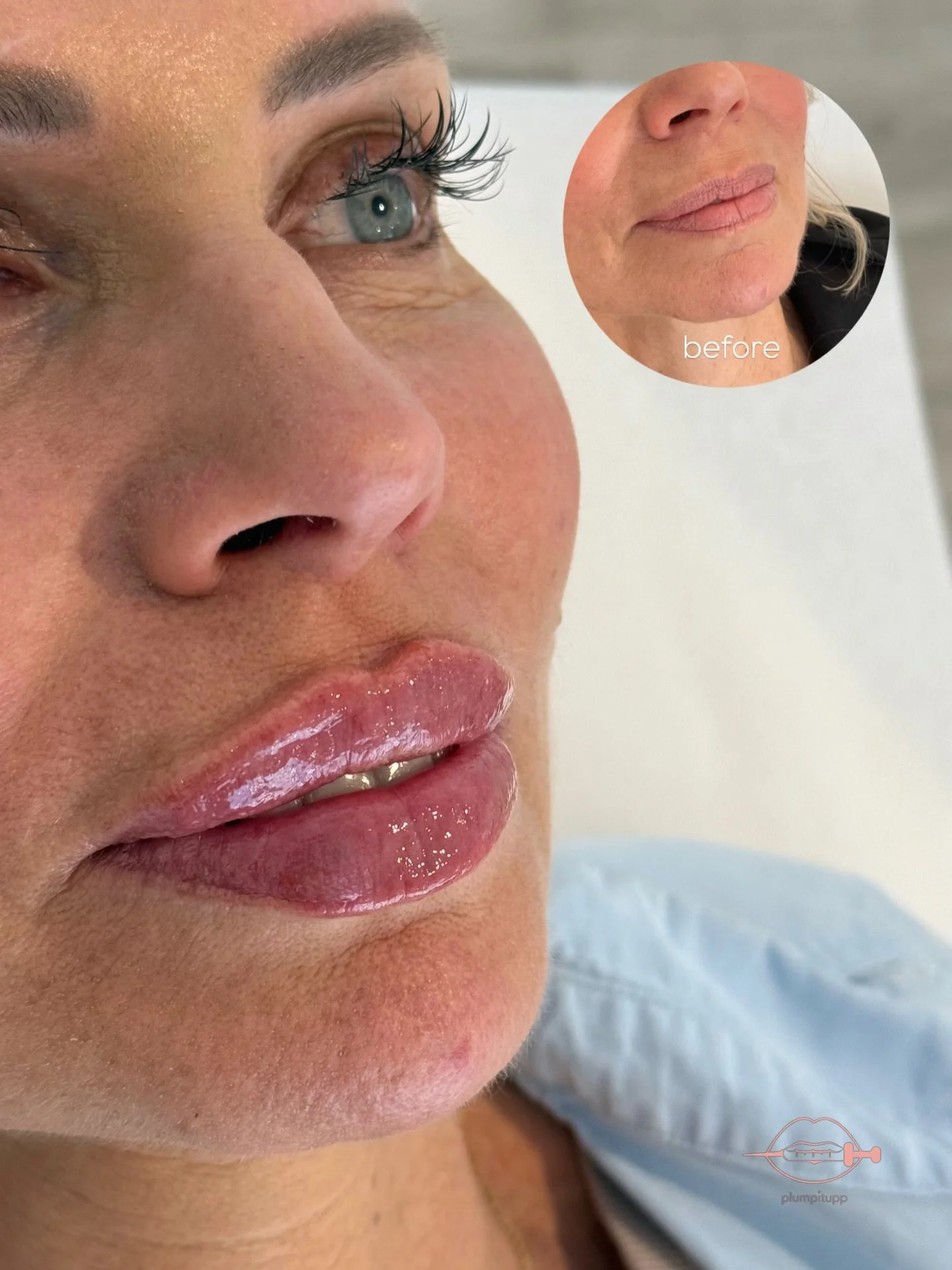
These are the fillers most commonly used for smile line treatment in 2026. Each has a different texture, longevity, and ideal use case. The right choice is matched to your fold depth, skin thickness, and whether reversibility matters to you.
Filler: Revannesse Outline
Type: Hyaluronic Acid (HA)
Best For: Mild nasolabial folds, first-time filler patients
Longevity: 9 to 12 months
Reversible: Yes
Notes: Softer correction with a conservative, natural-looking result.
Filler: Revannesse Contour
Type: Hyaluronic Acid (HA)
Best For: Moderate folds needing balanced support
Longevity: 12 to 18 months
Reversible: Yes
Notes: Provides structure while maintaining natural facial movement.
Filler: Revannesse Ultra
Type: Hyaluronic Acid (HA)
Best For: Deeper folds requiring additional volume and support
Longevity: 12 to 18 months
Reversible: Yes
Notes: Adds volume for more pronounced folds while preserving a natural appearance.
Filler: Radiesse
Type: CaHA biostimulator
Best For: Deeper folds, collagen stimulation
Longevity: 12 to 18 months
Reversible: No
Notes: Stimulates collagen production while restoring volume; not reversible.
Filler: Sculptra
Type: PLLA biostimulator
Best For: General facial volume loss rather than isolated folds
Longevity: Up to 2 years
Reversible: No
Notes: Gradually rebuilds collagen and is best suited for full-face rejuvenation.
Revannesse Contour: For Moderate to Deeper Nasolabial Folds
Revannesse Contouris one of the fillers we commonly use for moderate to deeper nasolabial folds because it provides structural support while maintaining natural facial movement.
Revannesse Ultra: For Volume and Support
Revannesse Ultra provides additional support for deeper folds while maintaining a natural appearance.
Revannesse Outline: For Subtle Correction
Revannesse Outline is often chosen for patients wanting a softer correction or treating finer facial lines.
Radiesse: When You Want Collagen Stimulation
Radiesse is calcium hydroxylapatite, not hyaluronic acid. It provides immediate volume and simultaneously stimulates your body to produce new collagen over the following months. For patients interested in long-term structural improvement rather than just filling a crease, this is worth understanding. The significant trade-off is that it cannot be dissolved. Starting with a reversible HA product and introducing Radiesse later is the more cautious path for new patients.
Sculptra: For Overall Facial Volume Loss
Sculptra works differently from traditional fillers. Instead of adding immediate volume, it gradually stimulates your body's own collagen production over several months. That makes it a better choice for patients with broader facial volume loss rather than those looking to soften the nasolabial folds alone.
Results develop gradually and can last up to two years, but Sculptra isn't reversible and usually requires multiple treatment sessions. At Plump It Upp, it's generally considered when restoring overall facial structure is the priority rather than treating a single crease in isolation.
On darker skin tones: the products above are safe across all skin types. What changes is injection technique and placement depth. At Plump It Upp, we have specific training in facial anatomy across Fitzpatrick III-VI skin tones. If you have had concerns about filler treatment on darker skin or had uneven results elsewhere, this is worth raising at your consultation.
Filler vs Other Treatments: What Else Can Help Smile Lines
If you’re doing research before booking, you may have come across other treatments mentioned alongside filler for nasolabial folds. Here’s the honest breakdown of what each option does and how it compares. These aren’t competing approaches. Most experienced injectors use a combination.
Treatment: HA filler (direct)
How It Works: Volume placed beneath the fold
Best For: Most nasolabial fold cases
Compared to Filler: First-line treatment for most patients
Treatment: Cheek filler (indirect)
How It Works: Mid-face volume lifts the fold from above
Best For: Patients with significant cheek volume loss
Compared to Filler: Often combined with fold filler for best results
Treatment: Dysport / neurotoxin
How It Works: Relaxes muscles that pull fold deeper
Best For: Dynamic fold component, muscle tension
Compared to Filler: Used alongside filler, not instead of it
Treatment: Radiesse (biostimulator)
How It Works: Stimulates collagen and adds volume
Best For: Patients wanting long-term skin structure
Compared to Filler: Longer lasting, not reversible
Treatment: PRF (Platelet-Rich Fibrin)
How It Works: Growth factors improve skin quality and thickness
Best For: Skin texture, not fold volume
Compared to Filler: Improves skin quality, doesn’t fill a crease
Treatment: Sculptra
How It Works: Gradual collagen stimulation over months
Best For: Full face volume loss, not fold-specific
Compared to Filler: Better for broader facial rejuvenation
Treatment: Non-injectable options
How It Works: Topical retinoids, RF devices, skin tightening
Best For: Mild lines, skin laxity
Compared to Filler: Supplement but rarely replace filler for moderate folds
The cheek filler row is the one that changes how many patients think about their treatment plan. Patients often come in wanting the fold filled directly, and leave with a plan to treat the cheeks first. The reason is that cheek volume loss is frequently what’s driving the fold deeper. Restoring the mid-face addresses the cause and often requires less product in the fold itself to achieve a satisfying result.
PRF sits in a different category from filler entirely. It improves skin quality, texture, and thickness over time. It doesn’t fill a crease. For patients whose main concern is skin quality rather than a specific fold, PRF may be more appropriate than filler. For most nasolabial fold presentations, both have a role and can be done together.
Cannula vs Needle: Does the Technique Matter?
You may have seen this discussed in online forums or on social media. Both are valid approaches and the right choice depends on the patient, the area, and the injector’s trained preference.
Factor: Precision
Needle: Higher, exact placement point
Cannula: Slightly less precise, skilled injectors compensate
Factor: Bruising risk
Needle: Higher, multiple puncture points
Cannula: Lower, blunt tip avoids vessels
Factor: Swelling
Needle: Moderate post-treatment
Cannula: Often less
Factor: Best for
Needle: Superficial or targeted placement
Cannula: Larger areas, bruise-prone patients
Factor: Pain
Needle: More injection points
Cannula: Single entry point, generally less
A needle allows more precise placement at a specific point. A cannula is blunt-tipped and flexible, entering through a single hole and passing under the skin without puncturing tissue the way a needle does. The reduced bruising risk is the main reason some injectors prefer it for the nasolabial area, particularly for patients who bruise easily or have a wedding or event within a week of treatment.
What matters more than the tool is the injector’s understanding of facial anatomy. Asking your injector which technique they use and why is completely reasonable. A good injector will explain their reasoning clearly.
How Long Does Nasolabial Fold Filler Last? What Affects It
The standard answer is 9 to 18 months depending on the product. But individual variation is significant, and knowing what affects longevity helps you plan maintenance and set realistic expectations.
Factor: Fold depth
Effect on Longevity: Deeper folds may absorb product faster
Notes: More movement means faster breakdown
Factor: Facial movement
Effect on Longevity: High expressive movement breaks down HA faster
Notes: Smiling frequency and intensity matters
Factor: Metabolism
Effect on Longevity: Faster metabolism processes HA more quickly
Notes: Younger patients or those with high metabolic rate
Factor: Exercise intensity
Effect on Longevity: High-intensity cardio can reduce longevity
Notes: Increased circulation speeds breakdown
Factor: Sun exposure
Effect on Longevity: UV damage reduces collagen, affecting how filler integrates
Notes: Consistent SPF use helps maintain results
Factor: Filler type and amount
Effect on Longevity: Denser gels and more product generally last longer
Notes: Product choice matched to anatomy matters
Factor: Interval between treatments
Effect on Longevity: Maintaining appointments before full dissolution prolongs results
Notes: Touch-up before gone extends the effect
The interval between treatments is the one most patients don’t think about until their second or third appointment. Maintaining filler before it has fully dissolved tends to extend the overall duration of results over time. This happens because the product integrates with surrounding tissue, and topping up before it’s completely gone means the baseline is higher going into each maintenance appointment.
High-intensity exercise is worth mentioning specifically because it comes up often. Increased circulation from cardio genuinely does speed HA breakdown for some patients. This doesn’t mean avoiding exercise after treatment. It means that very active patients may need maintenance appointments slightly more frequently.
Nasolabial Fold Filler Cost in Toronto: What to Expect
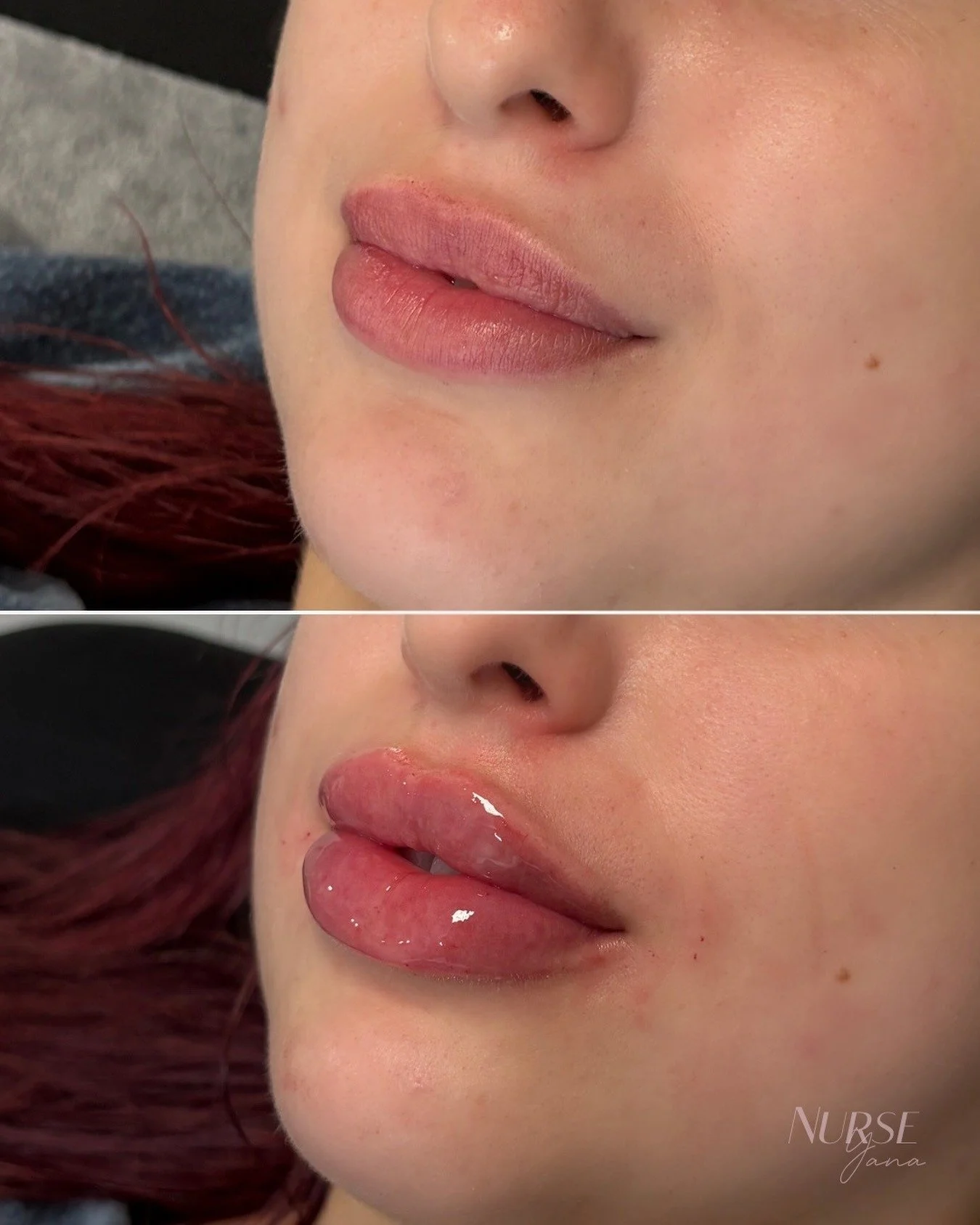
Cost varies based on fold depth, product choice, and whether cheek treatment is included. Most patients need one to two syringes for the nasolabial folds alone, but the full treatment plan often involves more.
Filler: Revannesse Contour
Typical Per Syringe (CAD): $700 to $900
Syringes Usually Needed: 1 to 2
Estimated Total: $700 to $1,800
Filler: Revannesse Ultra
Typical Per Syringe (CAD): $700 to $900
Syringes Usually Needed: 1 to 2
Estimated Total: $700 to $1,800
Filler: Revannesse Outline
Typical Per Syringe (CAD): $600 to $800
Syringes Usually Needed: 1 to 2
Estimated Total: $600 to $1,600
Filler: Radiesse
Typical Per Syringe (CAD): $700 to $950
Syringes Usually Needed: 1
Estimated Total: $700 to $950
Filler: Combined cheek + fold treatment
Typical Per Syringe (CAD): Varies
Syringes Usually Needed: 2 to 4 total
Estimated Total: $1,400 to $3,600+
The combined cheek and fold row reflects what many treatment plans actually look like. At Plump It Upp, we most often use Revannesse Ultra, Revannesse Contour, or Revannesse Outline, depending on your facial anatomy, fold depth, and treatment goals. Treating the cheeks alongside the nasolabial folds often creates a more balanced, natural-looking result than treating the folds alone.
In Toronto, pricing at nurse-led clinics like Plump It Upp reflects the time spent on assessment, the conservative approach, and the training involved. A lower per-syringe price at a high-volume clinic doesn’t represent the same thing. The consultation atPlump It Upp Medi Spa is where you get a clear plan and a specific cost before committing to anything.
Your First Appointment: What Happens Step by Step
For patients who have been researching for months, the thing that delays booking isn’t doubt about the outcome. It’s not knowing exactly what to expect from the appointment itself. Here’s what the full experience looks like from arrival to leaving.
Stage: Consultation begins
What Happens: Injector reviews your medical history, current medications, previous treatments
What You’re Deciding: Whether you proceed today or return for treatment
Stage: Facial assessment
What Happens: Injector examines your face at rest, smiling, and in profile. Takes photos.
What You’re Deciding: Which areas are contributing to the folds
Stage: Treatment plan discussion
What Happens: Injector explains product recommendation, how much, where, and why
What You’re Deciding: Whether the approach makes sense to you
Stage: Pricing and consent
What Happens: Clear cost breakdown. Signed consent form.
What You’re Deciding: Confirm you understand the risks and expected result
Stage: Numbing (if applicable)
What Happens: Topical cream applied, wait 15 to 20 minutes
What You’re Deciding: No decisions at this stage
Stage: Treatment
What Happens: 15 to 30 minutes. Injector places filler, checks symmetry throughout.
What You’re Deciding: You can ask to pause or stop at any point
Stage: Post-treatment review
What Happens: Injector reviews the result with you. Photos taken.
What You’re Deciding: Whether you’re happy with what’s been done
Stage: Aftercare instructions
What Happens: Written aftercare provided, follow-up booked for two weeks
What You’re Deciding: What to do and what to avoid
The assessment stage is the most important part and the one that distinguishes a conservative clinic from a volume-focused one. A thorough injector spends significant time looking at your face at rest, from different angles, and while you’re making expressions, before recommending anything. The photos taken before and after are for your records and help with planning future appointments.
You can say no at any point. You can come for the consultation and decide you want to think before proceeding. You can pause during treatment. The consent form is a formality that protects both parties, not a commitment to proceed with everything discussed. At Plump It Upp, the consultation is never a pressure situation.
What to Expect Day by Day: The Results Timeline
The most common source of post-treatment anxiety is seeing swelling on day two and thinking something went wrong. It didn’t. Swelling peaks around 48 hours, not immediately after treatment. Here’s what the first two weeks actually look like.
Day / Week: Day 1 (same day)
What You Typically See: Immediate softening of fold, some swelling and redness
What’s Normal: Swelling is not the final result
Day / Week: Day 2
What You Typically See: Swelling at its peak. Bruising may appear.
What’s Normal: This is the most swollen you will look
Day / Week: Day 3 to 4
What You Typically See: Swelling begins subsiding. Bruising yellowing.
What’s Normal: Still not the final result, be patient
Day / Week: Day 5 to 7
What You Typically See: Most swelling gone. Bruising fading.
What’s Normal: Result becoming clearer
Day / Week: Week 2
What You Typically See: Filler has settled. Final result visible.
What’s Normal: This is what you booked to achieve
Day / Week: Month 1+
What You Typically See: Result stable, integrating with tissue
What’s Normal: Maintain with SPF, avoid extreme heat
Day two is the day most patients worry. It’s also the day when the filler looks least like the final result. The swelling is normal, it’s the body responding to the injection, and it resolves over the following days. Bruising can look worse before it looks better as it comes to the surface. None of this indicates a problem.
Week two is the assessment point. By day 14, swelling has fully resolved, the filler has settled, and what you see is what you have. If anything about the result concerns you at this point, that’s the right time to follow up. Raising concerns at day two or three when swelling is still present leads to decisions based on incomplete information.
Aftercare: What to Do After Nasolabial Fold Filler
Timeframe: First 24 hours
Do: Gentle cool compress, stay hydrated, keep head elevated
Avoid: Touching or massaging treated area, intense exercise
Timeframe: 24 to 48 hours
Do: Monitor swelling (peaks here, not day one)
Avoid: Extreme heat: sauna, hot yoga, very hot showers
Timeframe: 48 to 72 hours
Do: Rest, gentle skincare
Avoid: Alcohol (worsens bruising and swelling)
Timeframe: One week
Do: Normal skincare resumed gradually
Avoid: Dental procedures, facial manipulation, facials
Timeframe: Two weeks
Do: Review result, follow up if any concerns
Avoid: Assessing the result before week two is complete
The alcohol restriction often surprises people. Alcohol causes vasodilation, which means it worsens bruising and swelling. Avoiding it for the first 48 hours makes a visible difference to how the treated area looks in the first week. This is worth planning around if you have a social event shortly after treatment.
Who Nasolabial Fold Filler Is Not Right For
This is the section most clinic websites skip. It shouldn’t be skipped. Filler is effective for a specific set of presentations. For others, it’s either not the right tool or the result won’t satisfy.
Situation: Significant skin laxity or sagging
Why Filler May Not Be Appropriate: Filler adds volume, doesn’t lift loose skin. Skin tightening may be more suitable.
Situation: Very deep folds with major volume loss
Why Filler May Not Be Appropriate: Filler alone may not satisfy. Multi-treatment approach often needed.
Situation: Active skin infection near the area
Why Filler May Not Be Appropriate: Treatment must wait until fully resolved.
Situation: Pregnancy or breastfeeding
Why Filler May Not Be Appropriate: Injectables not recommended during this period.
Situation: History of severe allergic reactions to filler
Why Filler May Not Be Appropriate: Medical screening required before any treatment.
Situation: Expectation of complete line elimination
Why Filler May Not Be Appropriate: Filler softens folds. Full facial movement will always remain. Lines visible when smiling is normal.
The skin laxity point is the most common honest conversation in consultations. When the main concern is loose skin sagging over the fold rather than volume loss beneath it, adding filler can make the face look heavier rather than refreshed. Skin tightening treatments or a surgical consultation may be more appropriate. An injector who tells you this at the assessment is working in your interest, not avoiding a sale.
The decision to get nasolabial fold filler is a personal one. The best outcome is a version of your face that looks more rested, not a face that looks treated. Getting there depends on assessment, product choice, conservative technique, and an injector who will tell you when something isn’t right for your anatomy rather than proceeding anyway.If you’re considering it, a consultation at Plump It Upp Medi Spa in Etobicoke is where the conversation starts.
The most important question isn’t which filler is technically best. It’s whether the injector you’re considering will tell you the honest answer when your face and their assessment don’t match what you came in asking for.
FAQs
How long does nasolabial fold filler last?
Between 9 and 18 months depending on the product. Revannesse Outline generally lasts around 9–12 months, while Revannesse Ultra and Revannesse Contour typically last around 12–18 months, depending on the individual. Radiesse is similar in longevity. Individual factors like metabolism, exercise intensity, sun exposure, and fold depth affect how quickly the product breaks down. Very active patients or those with faster metabolisms may need maintenance appointments more frequently.
How much does nasolabial fold filler cost in Toronto?
One to two syringes for the nasolabial folds alone, at $600 to $900 per syringe depending on the product. If cheek treatment is included, which often produces a better result by addressing mid-face volume loss, total treatment typically runs $1,400 to $3,600 or more. A consultation gives you a specific plan and a clear cost before you commit to anything.
Will nasolabial fold filler make my face look natural?
Yes, when placed conservatively and in the right amount. Natural results soften the fold without flattening the face. When you smile, the fold will still appear because it’s part of how your face moves. The difference is that it’s less deep at rest. Reviewing a provider’s before and after photos at rest and while smiling tells you much more about their aesthetic than photos at rest only.
What’s the difference between treating the fold directly and treating the cheeks?
Treating the fold directly fills the crease from below. Treating the cheeks restores mid-face volume that lifts the fold from above. Many experienced injectors do both simultaneously because cheek volume loss is often what’s driving the fold deeper. This approach uses less product in the fold itself and typically produces a more balanced, natural result than treating the fold alone.
Is nasolabial fold filler reversible?
Hyaluronic acid fillers, including Revannesse Ultra, Revannesse Contour, and Revannesse Outline, are reversible with hyaluronidase. Radiesse is not. If you’re new to filler, starting with an HA product gives you the option to dissolve it if needed. This reversibility removes a significant amount of first-timer anxiety.
Does it hurt?
Most patients describe it as manageable. Modern HA fillers contain lidocaine, which numbs the area progressively as treatment proceeds. Topical numbing cream can be applied beforehand to reduce initial discomfort further. The first injection is the most uncomfortable. Most patients are surprised by how much less uncomfortable subsequent ones are.
Can I get nasolabial fold filler if I have darker skin?
Yes. The filler products are safe across all skin tones. What changes is how placement decisions are made, including depth and the amount used in specific areas. At Plump It Upp, we have specific training in facial anatomy across Fitzpatrick III-VI skin tones. If you’ve had uneven results elsewhere or have concerns about treatment on darker skin, this is worth raising at the consultation.
When will I see the final result?
Week two is the assessment point. Swelling peaks around 48 hours after treatment, not immediately, which means the result on day two is not the final result. By day 14, swelling has resolved and the filler has settled. If anything about the result concerns you at that point, that’s the right time to follow up with your injector.
What’s the difference between a cannula and a needle for nasolabial folds?
A needle allows precise placement at a specific point but involves multiple puncture sites and higher bruising risk. A cannula enters through a single hole and passes under the skin without puncturing tissue, which reduces bruising and swelling significantly. Both are valid techniques. The choice depends on the patient, the area, and the injector’s trained preference.