

Marionette Lines Filler: Why People Have Frown Lines and 4 Ways to Fix It
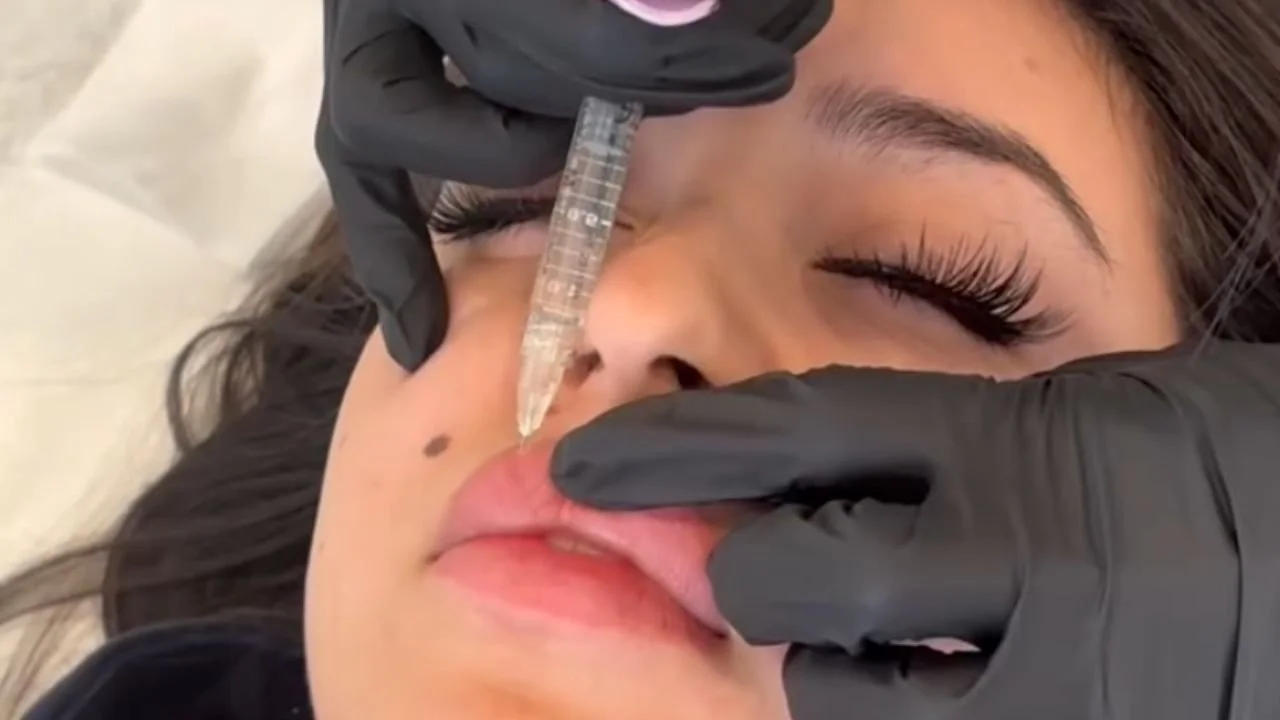
Marionette lines make your face look sad or disapproving even when you’re perfectly content. That’s the specific frustration most people bring to a consultation. Not vanity. The simple fact that your resting face has started communicating something you don’t feel.
These are the vertical lines that run from the corners of your mouth down toward your chin. They’re named after marionette puppets, which have the same lines where the movable jaw attaches. If you’ve been told you look serious when you’re relaxed, or noticed in photos that your mouth appears downturned when you thought you looked neutral, this is likely the area involved.
Before any treatment makes sense, it’s worth understanding that marionette lines don’t all form from the same cause. Volume loss, skin laxity, and muscle activity each contribute in different proportions for different people, and the right approach depends entirely on which is dominant.At Plump It Upp Medi Spa in Etobicoke, Nurse Reeya’s assessment starts there, not with a product.
Why Your Marionette Lines Look the Way They Do: 3 Types
Most people come in asking which filler is best for marionette lines. That’s the wrong first question. The right first question is what’s causing them, because the answer changes the treatment. There are three overlapping causes and most patients have some mix of all three.
Type: Volume-driven
What’s Happening: Fat pads in cheeks and lower face have thinned
What It Looks Like: Shadow and crease at rest, hollow appearance
Best Approach: Filler responds well here
Type: Laxity-driven
What’s Happening: Skin and soft tissue have descended downward
What It Looks Like: Heavy or dragging fold, tissue sitting in the crease
Best Approach: Filler helps but overfilling risk is higher
Type: Muscle-driven
What’s Happening: DAO muscle pulls mouth corners downward
What It Looks Like: Persistent downturned corners at rest
Best Approach: Dysport to DAO alongside filler
The muscle-driven type is the one most commonly missed. The depressor anguli oris, the DAO muscle, pulls the corners of the mouth downward. In some faces this muscle is quite active. Filler restores volume in a crease. It doesn’t stop a muscle from pulling. So if the DAO is a significant contributor, filler alone will soften the shadow but won’t fully address the downturned corners. Adding Dysport to the DAO alongside filler is what changes that.
Marionette Lines vs Smile Lines: Why They’re Not the Same

These are frequently confused. Both involve the area around the mouth. They’re different folds with different causes and different treatment strategies. If you’ve had your smile lines (nasolabial folds) treated and still feel your lower face looks downturned, this distinction explains why.
Factor
Nasolabial Folds
Marionette Lines
Location
Nose to mouth corners
Mouth corners to chin
Primary cause
Mid-face volume loss
Volume loss plus DAO muscle pull
Muscle component
Minimal
Significant
Treatment difference
Filler alone often sufficient
Usually needs filler plus DAO Dysport
Overfilling risk
Moderate
Higher, especially laxity-driven cases
The muscle component row is the critical difference. Nasolabial folds are primarily a volume problem. Marionette lines have that same component but also have the DAO muscle pulling on the mouth corners. Treating nasolabial folds without addressing marionette lines leaves the downturned corners in place. Treating marionette lines without addressing the DAO leaves the muscular pull in place. The full result comes from addressing both.
Can You Prevent Marionette Lines from Getting Worse?
You can’t prevent marionette lines from forming. Volume loss, muscle activity, and skin changes are part of aging and they’re going to happen regardless. What you can do is slow the rate at which they deepen and reduce the factors that accelerate them. If you’re in your late twenties or thirties and starting to notice early signs, this section is probably the most useful part of the article.
Factor: Sun exposure
Why It Matters: UV breaks down collagen and elastin, accelerating volume loss
What to Do: Daily SPF 30+ on the lower face, year-round
Factor: Smoking
Why It Matters: Reduces circulation and collagen production, deepens facial creases faster
What to Do: Quitting has measurable skin benefits within months
Factor: Hydration
Why It Matters: Well-hydrated skin maintains elasticity longer
What to Do: Consistent water intake, topical hyaluronic acid serums
Factor: Sleep position
Why It Matters: Side or stomach sleeping can crease lower face tissue repeatedly over years
What to Do: Back sleeping reduces mechanical fold formation
Factor: Facial movement habits
Why It Matters: Habitual downturned expressions may reinforce muscle patterns over time
What to Do: Awareness, not elimination of expression
Factor: Medical-grade skincare
Why It Matters: Retinoids stimulate collagen and slow visible aging in the lower face
What to Do: Alumier MD retinol and vitamin C, consistent use from early 30s
Daily SPF is the single highest-return prevention habit for the lower face. UV exposure degrades collagen in the skin over decades. People who have used consistent daily sun protection from their thirties typically see significantly slower visible aging in the lower face than those who haven’t. This isn’t an aesthetic opinion. It’s well-documented dermatology.
Medical-grade skincare adds to this. Retinoids stimulate collagen production and accelerate cell turnover. Used consistently from the early thirties, they don’t prevent aging but they measurably slow the rate of collagen loss in the treated skin. At Plump It Upp we use Alumier MD formulations, which are appropriate for a range of skin tones including Fitzpatrick III-VI, and can be combined with injectable treatment or used as a standalone maintenance protocol.
5 Ways to Treat Marionette Lines
1. Hyaluronic Acid Filler: The First-Line Option
Hyaluronic acid (HA) fillers are the first-line treatment for most marionette lines because they are reversible, provide immediate results, and allow conservative adjustments over time. At Plump It Upp, we primarily use Revannesse fillers by Prollenium. Depending on your anatomy and treatment goals, Nurse Reeya may recommend Revannesse Outline, Revannesse Contour, or Revannesse Ultra.
Filler: Revannesse Outline
Best For: Mild marionette lines, first-time patients
Longevity: 9–12 months
Reversible?: Yes
Notes: Soft correction with natural movement
Filler: Revannesse Contour
Best For: Moderate marionette lines
Longevity: 12–18 months
Reversible?: Yes
Notes: Adds structure while maintaining facial expression
Filler: Revannesse Ultra
Best For: Deeper marionette lines needing more support
Longevity: 12–18 months
Reversible?: Yes
Notes: More volumizing while preserving a natural appearance
Revannesse Outline: For Early or Subtle Lines
Revannesse Outline is often recommended for patients with milder marionette lines or those seeking conservative treatment. It softens shadows while preserving natural facial expression.
Revannesse Contour: For Moderate Marionette Lines
Revannesse Contour is commonly used for moderate marionette lines because it provides structural support while allowing natural facial movement. It helps soften the crease without creating a heavy appearance.
Revannesse Ultra: For Deeper Volume Loss
Revannesse Ultra is typically chosen for patients with deeper marionette lines and more noticeable lower-face volume loss because it provides greater structural support while maintaining a natural appearance.
2. DAO Dysport: Addressing the Muscle Component
This is the most commonly missed part of marionette line treatment and frequently the piece that makes the difference between a partial result and a complete one. The depressor anguli oris muscle pulls the corners of the mouth downward. A small, precise amount of Dysport placed into this muscle relaxes the downward pull and gently lifts the corners, changing the resting expression the face makes.
DAO treatment isn’t a filler. It doesn’t add volume. It changes how the muscle holds the corner of the mouth. For patients whose primary complaint is that they look disapproving or sad at rest, DAO Dysport is often more impactful than filler in the fold itself. Most treatment plans benefit from both: filler for the volume and shadow, Dysport for the muscular pull.
Dysport is Plump It Upp’s highest-revenue service because it genuinely changes how patients experience their resting expression. Nurse Reeya’s DAO technique is informed by international training in Korea and Taiwan, and the placement is precise because a millimetre in this area matters.Learn more about injectable treatments at Plump It Upp.
3. Radiesse: For Structural Improvement Over Time
Radiesse is calcium hydroxylapatite, not hyaluronic acid. It provides immediate volume and simultaneously stimulates collagen production over the following months. For patients with deeper marionette lines who want longer-lasting structural improvement alongside the immediate result, Radiesse is worth discussing. The significant trade-off is that it cannot be dissolved, which makes a reversible HA product the more appropriate starting point for new patients.
4. Sculptra: For Gradual Collagen Restoration
Sculptra works differently from traditional fillers. Rather than filling the crease immediately, it stimulates your body's own collagen production over several months, gradually improving facial volume and support. It's generally better suited for patients with broader facial volume loss rather than those wanting to correct only the marionette lines.
Because results develop gradually, Sculptra usually requires a series of treatments before the full effect becomes visible. The trade-off is longevity, with improvements that can last up to two years. For patients looking for a regenerative approach to facial aging rather than immediate correction, Sculptra can be an excellent option. During your consultation, Nurse Reeya will determine whether gradual collagen stimulation or immediate HA filler better matches your anatomy and goals.
5. Combination Approach: Treating the Full Lower Face
Treating the marionette line in isolation often produces an incomplete result. The fold deepens partly because of volume loss in the cheeks above it. Restoring cheek volume lifts the mid-face, which reduces the downward pull on the lower face and naturally softens the marionette line from above. For patients with notable cheek volume loss alongside their marionette lines, a combined approach produces a more balanced and longer-lasting outcome than treating the fold alone.
The full lower face plan may include cheek filler, marionette filler, DAO Dysport, and in appropriate patients, collagen-stimulating treatments such as Sculptra. The exact combination depends on your anatomy, degree of volume loss, and long-term goals.
How Many Syringes Do You Need for Marionette Line Filler?
This is the question most patients want answered before a consultation and the one no article answers directly. The honest answer is that it varies, but the variation is predictable based on fold depth and what else is being treated at the same time.
Fold Depth & Plan: Mild lines, first treatment
Syringes Typically Needed: 0.5 to 1 syringe per side
Notes: Conservative start, assess response before adding more
Fold Depth & Plan: Moderate lines, filler only
Syringes Typically Needed: 1 to 1.5 syringes total
Notes: Common starting point for volume-driven lines
Fold Depth & Plan: Deeper lines, volume-driven
Syringes Typically Needed: 1.5 to 2 syringes total
Notes: May include prejowl sulcus support alongside fold
Fold Depth & Plan: Moderate lines with cheek treatment
Syringes Typically Needed: 2 to 3 syringes total (cheek + fold)
Notes: Cheek volume reduces fold depth from above
Fold Depth & Plan: Full lower face: fold + cheek + jawline
Syringes Typically Needed: 3 to 5 syringes total
Notes: Comprehensive plan for full face refresh
Fold Depth & Plan: Filler + DAO Dysport combined
Syringes Typically Needed: 1 to 2 syringes filler + 10 to 20 units DAO per side
Notes: Most complete approach for muscle-driven component
The conservative start row is the most important one for first-time lower face patients. Starting with less and assessing the result is always the better approach in the marionette area. Adding product at a follow-up if needed is straightforward. Reversing an overfilled lower face is possible but more complex. At Plump It Upp, Nurse Reeya will recommend a specific starting amount based on your anatomy and then discuss whether a follow-up is warranted after the initial result has settled.
Alternatives to Filler: Thread Lifts, Skin Tightening, and Surgery
This is the section most injector-led clinics don’t include, and it is the one that builds the most trust. Filler is effective for a specific presentation of marionette lines. It’s not the only option and it’s not always the best one. Here’s the honest comparison.
Treatment: DAO Dysport
What It Does: Relaxes depressor muscle, lifts mouth corners
Compared to Filler: Addresses muscle cause, complements filler
Best Suited For: Significant muscle-driven component
Treatment: Thread lift
What It Does: Mechanical lift of lower face tissue
Compared to Filler: More lift than filler, less than surgery
Best Suited For: Mild to moderate laxity, not deep folds
Treatment: Morpheus8 (RF microneedling)
What It Does: Tightens skin and stimulates collagen in lower face
Compared to Filler: Improves skin quality, doesn’t fill a crease
Best Suited For: Laxity-driven lines, skin texture concerns
Treatment: Sculptra
What It Does: Gradual collagen restoration over months
Compared to Filler: Slower than HA filler, longer lasting
Best Suited For: Full face volume loss, regenerative approach
Treatment: Surgical facelift
What It Does: Repositions and removes descended tissue
Compared to Filler: Permanent vs temporary, higher recovery
Best Suited For: Advanced laxity with jowling
Treatment: Laser resurfacing
What It Does: Improves surface skin quality
Compared to Filler: Treats skin texture, not volume loss
Best Suited For: Fine surface lines alongside deeper folds
Morpheus8, the radiofrequency microneedling treatment available at Plump It Upp, sits in a particularly useful position for patients with laxity-driven marionette lines. It tightens the skin and deeper tissue in the lower face, which can reduce the heaviness that makes laxity-driven folds worse when treated with volume alone. For some patients, Morpheus8 used before or alongside conservative filler produces a better result than either treatment separately.
The surgical row is worth addressing directly. For patients with advanced jowling and significant tissue descent, a facelift is genuinely more appropriate than continued filler use. A good injector will say this. At Plump It Upp, if your anatomy calls for a surgical conversation, Nurse Reeya will tell you at the assessment. That’s not a referral away from the clinic. It’s the educational-first approach in practice.
Natural Results vs Overfilled: What the Difference Looks Like
The specific fear most patients carry into a marionette line consultation is the overfilled lower face. The heavy, downward-weighted appearance around the mouth that reads as done. It’s a legitimate concern. The marionette area is visible in conversation and errors here are harder to hide than in other areas.
Factor: Line appearance
Natural Result: Softened fold, visible when animated
Overfilled Result: Completely flat, distorted when smiling
Factor: Lower face
Natural Result: Balanced contour preserved
Overfilled Result: Pillow-like or heavy lower face
Factor: Mouth corners
Natural Result: Gently lifted expression
Overfilled Result: Unnatural puffiness around commissures
Factor: Facial movement
Natural Result: Moves naturally
Overfilled Result: Restricted or stiff appearance
Factor: Profile view
Natural Result: Smooth transition, harmonious
Overfilled Result: Visible ledge or shelf effect
Overfilled marionette lines almost always come from treating laxity-driven lines with volume. When the main issue is descended tissue rather than lost volume, adding filler to a fold that already has tissue sitting in it makes the lower face heavier. The fold fills but the surrounding tissue doesn’t lift. This is why the three-type assessment at the start of this guide matters before any product is recommended.
Conservative placement and appropriate product selection are the technical answers. The clinical answer is an injector who accurately identifies which type of line you have before recommending anything.
What to Expect Day by Day After Marionette Line Treatment
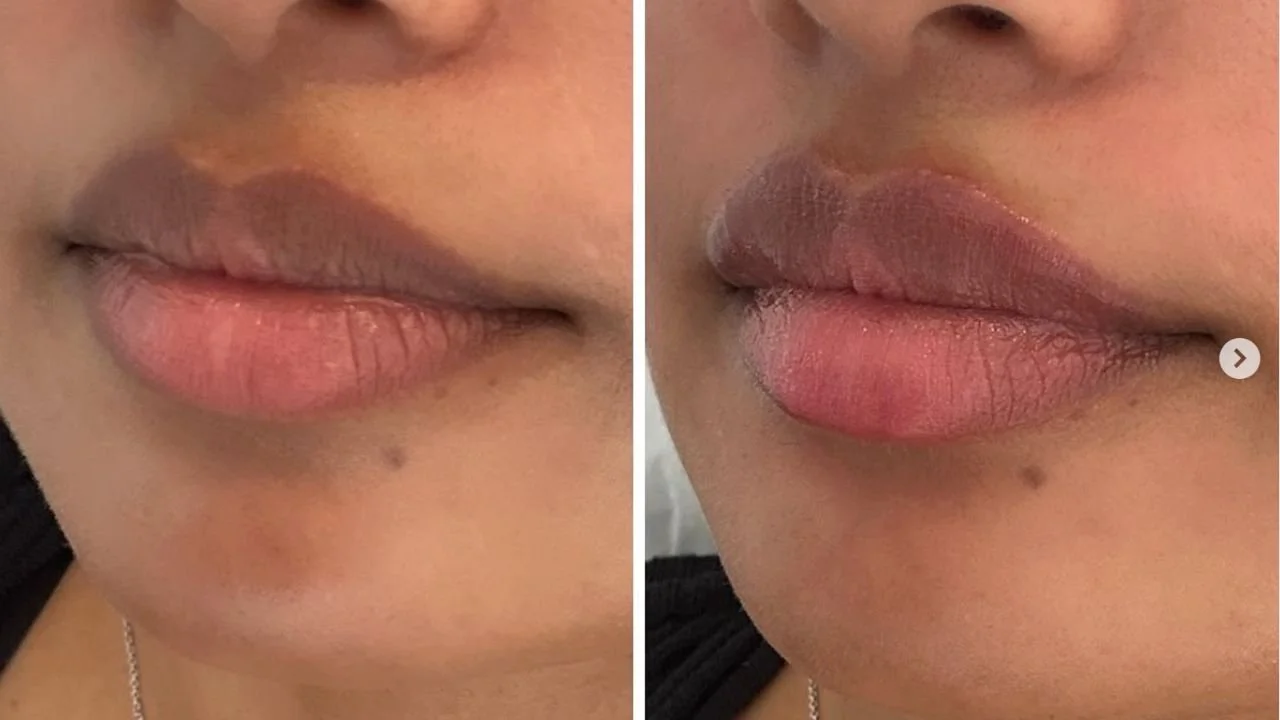
Day two is when most patients worry. The swelling is at its peak and the result looks more changed than it will at the end of week two. This is completely normal and doesn’t indicate a problem. Here’s what the full two-week period actually looks like.
Day / Week: Day 1 (same day)
What You Typically See: Immediate softening, some redness and swelling
What’s Normal: Not the final result, swelling is present
Day / Week: Day 2
What You Typically See: Swelling at its peak, possible bruising appearing
What’s Normal: This looks more swollen than day one. Normal.
Day / Week: Day 3 to 4
What You Typically See: Swelling beginning to subside, bruising yellowing
What’s Normal: Still not final result, be patient
Day / Week: Day 5 to 7
What You Typically See: Most swelling gone, bruising fading
What’s Normal: Result becoming clearer
Day / Week: Week 2
What You Typically See: Filler has settled, final result visible
What’s Normal: This is what you booked to achieve
Day / Week: Month 1+
What You Typically See: Result stable, filler integrating with tissue
What’s Normal: Maintain with SPF, avoid extreme heat
The marionette area is next to the mouth and experiences significant movement from talking, eating, and expression. This means the first few days can feel slightly different from getting filler in less mobile areas. Some mild firmness or awareness in the treated area is normal and resolves as the product integrates. The two-week mark is when swelling has fully resolved and the filler has settled. That’s the right point to assess the result and decide if anything needs adjustment.
Aftercare After Marionette Line Filler
The marionette area deserves specific aftercare guidance because of its location next to the mouth. More movement happens in this area than in the cheeks or temples, which means the first 24 to 48 hours need a bit more care than standard filler aftercare.
Timeframe: First 24 hours
Do: Gentle cool compress, stay hydrated, rest
Avoid: Touching or pressing the area, intense exercise
Timeframe: 24 to 48 hours
Do: Monitor swelling (peaks here, not day one)
Avoid: Extreme heat: sauna, hot yoga, very hot showers
Timeframe: First 48 hours (specific to marionette area)
Do: Eat soft foods, avoid wide mouth movements
Avoid: Straws, chewing very hard foods, excessive talking
Timeframe: 48 to 72 hours
Do: Resume gentle skincare
Avoid: Alcohol (worsens bruising and swelling)
Timeframe: One week
Do: Normal skincare gradually resumed
Avoid: Dental procedures, facial massage
Timeframe: Two weeks
Do: Assess final result, follow up if concerns
Avoid: Judging result before two weeks complete
The soft foods note is the one specific to this area. Chewing hard or chewy foods, using straws, or opening the mouth very wide in the first 24 to 48 hours puts mechanical stress on the treated tissue before the filler has fully settled. This doesn’t cause serious problems but can contribute to temporary asymmetry or migration. Keeping oral movement gentle for the first couple of days is worth doing.
The alcohol note applies across all filler aftercare but deserves repeating. Alcohol causes vasodilation which worsens bruising and swelling. Avoiding it for 48 hours makes a visible difference to how the treated area looks in the first week.
Marionette Lines Treatment Cost in Toronto
Treatment: Revannesse HA filler
Typical Cost Per Unit/Syringe (CAD): $650 to $900 per syringe
Amount Usually Needed: 1 to 2 syringes
Estimated Total: $650 to $1,800
Treatment: Radiesse
Typical Cost Per Unit/Syringe (CAD): $700 to $950 per syringe
Amount Usually Needed: 1 syringe
Estimated Total: $700 to $950
Treatment: DAO Dysport
Typical Cost Per Unit/Syringe (CAD): $12 to $15 per unit
Amount Usually Needed: 10 to 20 units per side
Estimated Total: $240 to $600 both sides
Treatment: Filler + DAO combined plan
Typical Cost Per Unit/Syringe (CAD): Varies
Amount Usually Needed: Combined
Estimated Total: $900 to $2,400+
Treatment: Sculptra series
Typical Cost Per Unit/Syringe (CAD): $800 to $1,000 per vial
Amount Usually Needed: 2 to 3 sessions
Estimated Total: $1,600 to $3,000
The combined filler and DAO plan is what most complete treatment plans look like. Addressing the volume component with filler and the muscular component with Dysport in the same appointment is efficient and typically produces a more satisfying result than either treatment alone. The DAO component is also significantly less expensive than an additional syringe of filler.
Pricing at nurse-led clinics like Plump It Upp reflects assessment time, conservative technique, and training. A lower per-syringe price at a high-volume clinic represents a different experience. The consultation atPlump It Upp in Etobicoke gives you a specific plan and clear cost before you commit to anything. There is no pressure to proceed on the day.
When Filler Isn’t the Right Answer
This section builds the most trust and is the one most clinic websites skip. Filler is effective for a specific presentation of marionette lines. For others, it either won’t produce a satisfying result or may make the lower face look heavier.
Situation: Significant laxity with jowling
Why Filler Alone May Not Be Appropriate: Filler can worsen heavy appearance. Skin tightening or surgical options may serve better.
Situation: Lines primarily muscle-driven, no volume loss
Why Filler Alone May Not Be Appropriate: Filler addresses shadow but not cause. DAO Dysport is the primary treatment here.
Situation: Very deep folds with jowl descent
Why Filler Alone May Not Be Appropriate: Comprehensive surgical assessment may produce better long-term outcomes.
Situation: Pregnancy or breastfeeding
Why Filler Alone May Not Be Appropriate: Injectables not recommended during this period.
Situation: Expectation of complete elimination
Why Filler Alone May Not Be Appropriate: Marionette lines soften. Full expression will always show some line. Natural movement remains.
The laxity with jowling row is the most important one. When the primary issue is tissue that has descended rather than volume that has been lost, adding product to a fold that already has tissue sitting in it creates a heavy appearance. The fold fills. The surrounding tissue doesn’t lift. The result looks like more face, not a refreshed face. Identifying this correctly at the assessment is what prevents it.
The most common thing patients say about marionette lines is that they only noticed them when someone mentioned they looked tired. By that point, the lines have typically been affecting the resting expression for longer than realised. The right combination of treatments can genuinely change what your face communicates at rest, not by erasing something, but by restoring what made the lower face look balanced in the first place.A consultation at Plump It Upp Medi Spa in Etobicoke is where that assessment starts.
The question worth sitting with before any treatment is this: if your resting face could say one thing, what would you want it to say?
FAQs
What are marionette lines?
Vertical creases that run from the corners of the mouth down toward the chin. They’re named after marionette puppets, which have a similar movable jaw line. They create a downturned appearance at the mouth corners and can make the face look sad or disapproving at rest. They become more prominent with age as volume shifts, skin loses elasticity, and the DAO muscle activity becomes more visible.
What’s the difference between marionette lines and nasolabial folds?
Nasolabial folds run from the nose to the mouth corners. Marionette lines run from the mouth corners to the chin. The key clinical difference is the muscle component: the depressor anguli oris pulls the mouth corners downward and significantly contributes to marionette line depth. This is why filler alone sometimes produces incomplete results in this area, and why adding DAO Dysport alongside filler typically completes the outcome
Can Dysport or Botox help marionette lines?
Yes, specifically for the muscle-driven component. A small amount of Dysport placed into the DAO muscle relaxes the downward pull on the mouth corners. This gently lifts the corner of the mouth and improves the resting expression. DAO treatment works alongside filler, not instead of it: filler addresses the volume and shadow, Dysport addresses the muscular pull. Together they produce a more complete result than either treatment alone.
How many syringes do you need for marionette line filler?
It depends on fold depth and whether adjacent areas like the cheeks or jawline are included in the treatment plan. For mild lines treated conservatively, 0.5 to 1 syringe per side is a common starting point. Moderate lines typically need 1 to 1.5 syringes total. When cheek treatment is included to address the upstream volume loss, total syringe count rises to 2 to 3. The best approach is always to start conservatively and assess before adding more.
5. How long does marionette line filler last?
Hyaluronic acid fillers typically last 9 to 18 months, depending on the product used and individual factors. Revannesse Outline generally lasts around 9 to 12 months, while Revannesse Contour and Revannesse Ultra typically last 12 to 18 months. Radiesse also lasts around 12 to 18 months while continuing to stimulate collagen production. If your treatment plan includes DAO Dysport to relax the muscles pulling the mouth corners downward, it typically needs refreshing every 3 to 4 months. Factors such as metabolism, facial movement, exercise, and the amount of product used can all influence how long your results last.
6. When will I see the final result?
Swelling peaks around 48 hours after treatment, not immediately. The result on day two is not the final result. By day 14, swelling has fully resolved and the filler has settled into position. This is the right point to assess the outcome. If anything concerns you before two weeks, it’s almost certainly related to swelling rather than the result itself.
7. What aftercare is specific to the marionette area?
The marionette area is next to the mouth and experiences more movement than many other filler sites. In the first 24 to 48 hours, eat soft foods, avoid using straws, and keep large mouth movements gentle. The standard filler aftercare applies too: no exercise for 24 hours, avoid extreme heat, no alcohol for 48 hours, and don’t press or massage the treated area. Final results are visible in two weeks.
8. Can filler make marionette lines look worse?
Yes, in specific presentations. When marionette lines are primarily driven by tissue laxity and descent rather than volume loss, adding filler to the fold can make the lower face appear heavier without lifting it. The fold fills but the descended tissue above doesn’t move. For laxity-dominant cases, skin tightening (Morpheus8), thread lifts, or surgical options may produce better outcomes than filler alone. Accurate assessment before treatment is what prevents this.
9. How much does marionette line treatment cost in Toronto?
At Plump It Upp, we primarily use Revannesse fillers by Prollenium (Outline, Contour, and Ultra), which generally range from $650 to $900 per syringe depending on the product selected. Most patients require 1 to 2 syringes to treat the marionette area, while more comprehensive facial balancing plans may require additional products.
Most patients need 1 to 2 syringes for the marionette area. Adding DAO Dysport costs $240 to $600 for both sides. A combined filler and DAO plan typically totals $900 to $2,400 depending on the treatment plan. A consultation at Plump It Upp gives you a specific plan and clear cost before you commit to anything.
10. What if I have darker skin? Is marionette line treatment safe for me?
Yes. HA fillers, Radiesse, Sculptra, and Dysport are suitable for a wide range of skin tones when used by an experienced injector. The treatment approach itself doesn’t change based on skin colour. At Plump It Upp, approximately 30% of clients have Fitzpatrick III-VI skin tones and Nurse Reeya’s training specifically includes facial anatomy across this range. If you have concerns about injectable treatment on darker skin, or have had inconsistent results elsewhere, raise this at the consultation.